alloxy.me
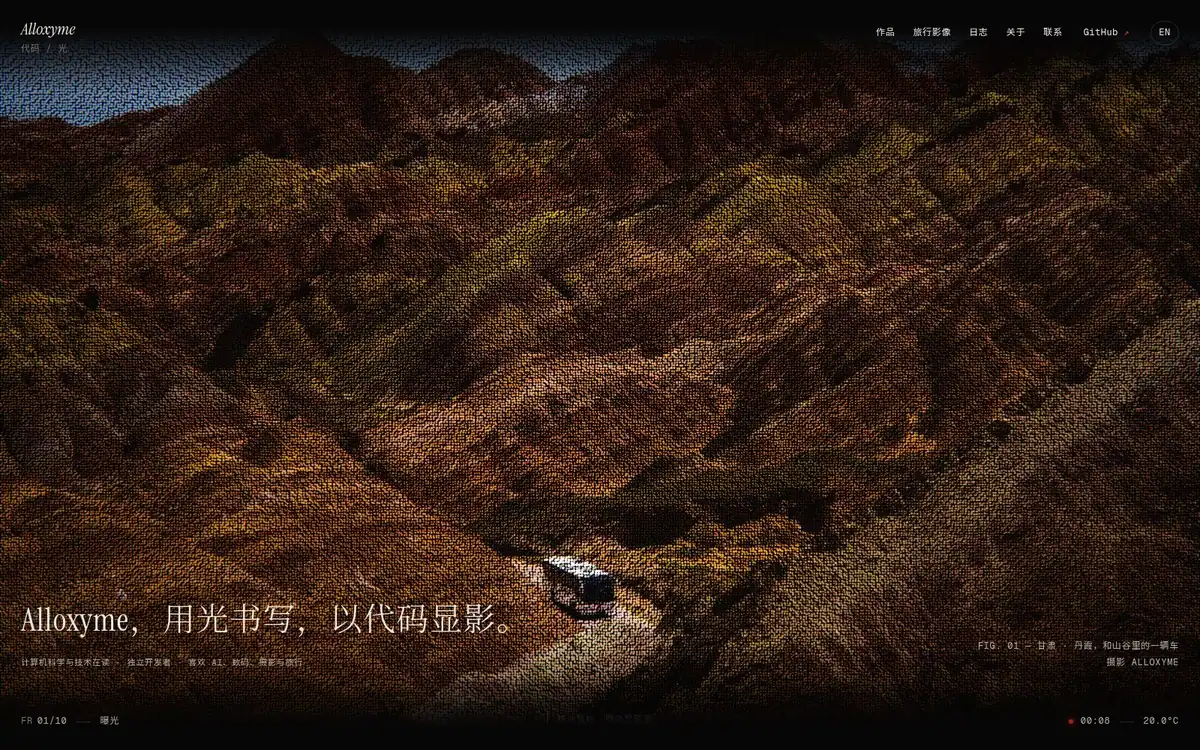
The site you are looking at: a darkroom built in the browser, where pictures are made of glyph grains that surface under red light and develop into colour.
AWhat it is
My personal site, and an experiment: no picture is simply shown. Each one is “developed” from about a hundred thousand grains made of code characters.
BHow it’s built
A static Next.js export with three.js for the WebGL. Grains take their colour and develop in a shader; under the pointer, a wave-equation surface makes them refract; pages change behind cinema bars. Bilingual, deployed on Cloudflare Workers.
CKept fast
Every picture is WebP; the Chinese faces carry only the eight hundred or so characters the site uses; three.js loads after the page is interactive. A first visit to the home page went from 9.4 MB to 0.9 MB.

DThe lines that matter
// shadows develop first, as on paperfloat dev = clamp((uDevelop * 1.7 - luma * 0.5 - aRand * 0.35) / 0.85, 0.0, 1.0);float shape = mix(glyph, disc, dev);gl_FragColor = vec4(mix(latent, vColor, dev), shape * vAlpha);